
Music, an art form that transcends borders and cultures, possesses a history as varied and rich as human civilization. As a student, delving into the evolution of music genres can not only heighten your appreciation for music but also serve as a compelling gateway to understanding societal shifts and historical events.
While students are usually occupied with various activities and homework, learning about music history can provide a wonderful break from regular study. To manage time, one can even consider options like hiring a professional paper writer to “write my essay online“.
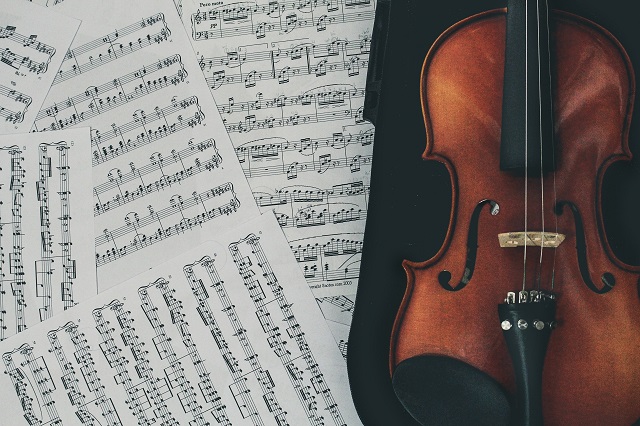
This can alleviate academic stress and free up time for you to explore subjects that pique your interest, such as the fascinating journey of music through the ages.
Tracing the Origins
Music’s roots run deep, extending back to periods before recorded history, with its origins firmly nestled within the fabric of ancient human culture. Archaeological findings hint at music being an integral part of communal activities — from rituals and celebrations to simple merriment.
Ancient societies, like the Greeks and Romans, embraced music as a cornerstone of life, incorporating it into religious rites, military protocols, and theatrical performances. Even at this time, the seeds of musical theory and notation were being sown, with figures like Pythagoras contributing to their growth.
This period also marked music’s transition into structured forms, mirrored by the intricate musical traditions of regions like India, China, and the Middle East.
These civilizations developed intricate musical systems with a range of instruments, scales, and melodic structures. In Africa, music was central to communal life, with diverse and complex rhythms played on a variety of percussion instruments.
Across continents and cultures, music served both functional and aesthetic purposes, with distinct regional characteristics.
The Evolution of Classical Music
During the Middle Ages, music started to become a more formalized art form. This period saw the development of choral music for religious services, the most famous form being Gregorian chant. The Renaissance period brought new innovations to music with the advent of polyphony and the use of harmony.
The Baroque period, from around 1600 to 1750, was an era of experimentation and grandeur in music. This era gave birth to many forms we still see today, including the concerto and sonata.
In the Classical period that followed, composers like Mozart and Beethoven brought a balance between expression and form, creating works that are considered timeless.
Following the Classical period, the Romantic era marked a shift toward emotional expression and individualism in music. Composers such as Franz Schubert, Johannes Brahms, and Pyotr Ilyich Tchaikovsky created pieces that expressed intense emotions and explored complex themes.
During the late 19th and early 20th century, the Modernist period introduced radical approaches and harmonies. Composers like Igor Stravinsky and Arnold Schoenberg broke traditional boundaries, paving the way for the diverse landscape of classical music we see today.
As we advanced into the 20th century, music transformed radically, with composers exploring diverse forms, tonalities, and techniques. This experimentation birthed styles and movements such as Impressionism, Expressionism, and Minimalism, stretching the very definition of music and augmenting its expressive potential.
Impressionist composers like Claude Debussy and Maurice Ravel sought to create music that evoked moods and sensations, often drawing inspiration from nature, art, or the exotic. Meanwhile, Expressionist composers like Alban Berg and Anton Webern focused on conveying intense emotional states.
Minimalist composers, such as Steve Reich and Philip Glass, moved in the opposite direction, creating music that emphasized repetition and gradual change. These experimental approaches broadened the boundaries of what could be considered music and expanded the expressive potential of the art form.

From Blues to Pop: The 20th Century Onwards
The 20th century bore witness to a spectacular proliferation of music genres, a growth spurt propelled by technological advancements like radio and record players, which democratized access to music. Jazz, a unique blend of improvisation and syncopation, emerged from the African-American communities in New Orleans, marking a significant shift in musical style.
In the post-World War II era, rock and roll claimed the spotlight, seeding genres like pop, punk, and heavy metal. Hip-hop surfaced in the 1970s and ascended to a dominant genre by the dawn of the 21st century. The musical landscape of today is a vibrant mosaic of subgenres and fusion genres, mirroring our multifaceted society.
The late 20th and early 21st centuries have been characterized by a captivating mix of musical styles and genres. Electronic music, a product of the latter half of the 20th century, revolutionized music production, sparking genres like house, techno, and dubstep.
The ascendancy of digital platforms in the 21st century democratized music production and distribution even further, promoting a multitude of independent artists and genres. Today’s listeners can virtually traverse a global music library, making it an exciting era for music exploration.
The 21st century’s musical landscape is in constant flux, shaped by evolution and experimentation. Digital music production tools have leveled the playing field, empowering anyone with a computer to compose, produce, and share their music on a global platform.
The internet and social media have revolutionized how we discover and consume music, allowing the exploration of diverse genres worldwide and boosting global music phenomena like K-pop.
The blending of genres has given birth to innovative hybrid genres, such as country rap and electro-swing, with artists continually pushing boundaries and reshaping the musical landscape.
Music Genres in College Assignments
Studying the history of music can be a rewarding assignment for college students. It not only broadens your cultural understanding but also sharpens your analytical skills as you examine how societal changes influenced musical development.
Students can explore music history through various media — books, documentaries, podcasts, and, of course, the music itself. Creating a playlist of iconic songs from different eras can be a fun and interactive way to trace the evolution of music.
Alternatively, students can attend concerts, operas, or music festivals to experience different genres first-hand. These can make for great school assignments, fostering an active learning process.

Conclusion
Appreciating the evolution of music can heighten our understanding of today’s varied and vibrant soundscape. Music is not merely a form of entertainment; it’s a societal mirror reflecting echoes of our past and rhythms of our present.
Whether you’re preparing for a class or eager to broaden your musical understanding, immerse yourself in the world of music history.
A journey through music history can be illuminating, offering insights into societal transformations, technological progress, and the fusion of cultures.
As you navigate your academic journey, remember you can lean on the best essay writing services to assist with your workload, providing you the freedom to pursue your passions and enrich your educational experiences.
Keep being AllDayChic!