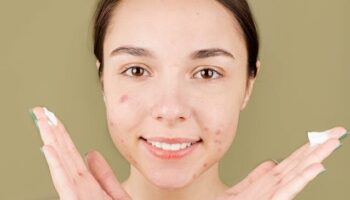
Unfortunately, acne is a skin condition that doesn’t just affect teenagers. Even well in your 20s, 30s, or even 40s, you could find yourself battling against these spots. If your skin is prone to acne, you probably know about every remedy on the market, from salicylic acid to anti-inflammatory sulphur. However, these are not the only products that can help you live acne-free. Have you heard about light therapy?

Light therapy 101
As you have probably figured out from the name itself, this therapy uses light to heal your skin and help you avoid future outbreaks. The idea behind the therapy is that certain artificial light affects the skin at the cellular level. Light is a type of energy that comes in different wavelengths. We see those wavelengths as different colours. Various wavelengths lead to intracellular reactions that result in numerous skin benefits.
Blue light therapy
It has been proven that the blue colour is the most effective when it comes to acne. Blue light has not only antibacterial properties but also regulates sebum production and tones down inflammation. But let’s take a few steps back. Bacteria that cause acne produce porphyrins protein. When you expose your skin to blue light, that protein absorbs it, which leads to a chemical reaction that kills the bacteria.
As mentioned, blue light also keeps sebum production under control, and if you have been struggling with acne for some time, you probably know that sebum is responsible for clogged pores. When the sebum levels rise, acne begins to appear. One of the most annoying parts of the vicious acne cycle is inflammation and redness. Blue acne light therapy can also help with those.
So, why is this important? If you have realised that you have sensitive skin which doesn’t react well to all those anti-acne products, light therapy may just be what the doctor prescribed. These LED treatments are a great alternative to standard treatments, although they work best when used together.
When light therapy isn’t a good idea?
It is important to remember that light therapy is not effective for all breakouts. This therapy shows its full potential when inflammatory acne lesions are in question. If your skin is covered in red, tender pustules, blue light therapy could help you with this problem.
Apart from blue light therapy, there is also red light therapy. That one is most often used to address acne scarring since it boosts the skin’s healing process. With red light therapy, you can also speed up the regeneration of collagen and elastin. On the other hand, yellow and green light is helpful when it comes to discoloured acne scars.
Using light therapy
The good news is that you can practise light therapy at home, on your own. However, it is recommended to consult with your dermatologist beforehand. With that said, you can try facial masks or light pens which are better for spot treating. Keep in mind that you won’t see results unless you repeat the process over and over again. It is important to follow strict instructions for the best results.
If you are not sure whether you will know how to use this treatment correctly, opt for in-office treatments. Professional treatments also require repetition. For instance, if you opt for blue light therapy, you will need to spend some time under the light up to three times per week for four to six weeks.
Possible side effects
Another great thing about light therapy is that side effects are minimal. For instance, people with certain rare eye conditions can be sensitive to specific wavelengths. This is why it’s very important to wear proper eye protection during these treatments. After a treatment you may experience skin dryness, changes in skin colour, stinging, or itchiness, and irritation. However, these will go away quickly on their own.
Light therapy is an effective acne treatment for most skin types. It is generally safe, with only several exceptions, which is why it’s important to discuss it with your dermatologist. While in-office treatments provided by a professional dermatologist are your best bet, a home mask or pen can also help you achieve clean, healthy skin.
Keep being AllDayChic!