
Navigating streets safely is a shared responsibility between pedestrians and drivers. In urban environments, where foot traffic intermingles with vehicular flow, understanding right-of-way laws becomes paramount for pedestrian safety.
Las Vegas pedestrian accident attorneys state that pedestrians are smaller, lighter, and much more vulnerable in an accident than motor vehicles. That’s why it’s paramount for pedestrians to know when to yield and when to proceed to prevent accidents and ensure smooth traffic flow.
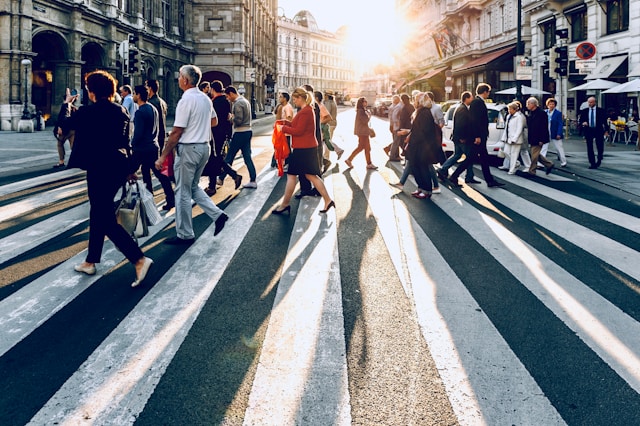
Photo by Jacek Dylag on Unsplash
In this article, we explain essential right-of-way laws that pedestrians should know to navigate roads safely.
1. Crosswalks
- Crosswalks, whether marked or unmarked, grant pedestrians the right-of-way.
- Marked crosswalks are typically indicated by white stripes on the road surface, while unmarked crosswalks are extensions of sidewalks at intersections.
- Pedestrians have the right-of-way when crossing within a marked or unmarked crosswalk.
- However, it’s crucial for pedestrians to exercise caution and ensure that vehicles have ample time to stop before stepping into the crosswalk.
2. Traffic Signals
- Pedestrians must obey traffic signals, including pedestrian-specific signals.
- “Walk” signals indicate that pedestrians have the right-of-way to cross, while “Don’t Walk” or “Wait” signals indicate that pedestrians should not enter the crosswalk.
- Pedestrians should always adhere to these signals for their safety and to maintain traffic flow.
3. Intersections
- At intersections without traffic signals or where signals are not in operation, pedestrians should yield the right-of-way to vehicles if crossing outside of a marked or unmarked crosswalk.
- When crossing at intersections with traffic signals, pedestrians should follow the signals as mentioned earlier.
4. Yielding to Emergency Vehicles
- Pedestrians must yield the right-of-way to emergency vehicles such as ambulances, fire trucks, and police cars with activated sirens and/or flashing lights.
- When an emergency vehicle approaches, pedestrians should move to the side of the road and allow the vehicle to pass safely.
5. Yielding on Sidewalks
- Pedestrians walking on sidewalks should have the right-of-way over vehicles entering or exiting driveways, alleys, or parking lots.
- However, pedestrians should remain vigilant and make eye contact with drivers to ensure they are seen, especially in areas with obscured visibility.
6. School Zones and Crossings
- In school zones or at designated school crossings, drivers are required to yield the right-of-way to pedestrians, especially children, who are crossing the street.
- Pedestrians should utilize designated crossing areas and adhere to crossing guards’ instructions for added safety.
7. Turning Vehicles
- Pedestrians should exercise caution when crossing streets where vehicles are making turns.
- Even if pedestrians have the right-of-way, they should make eye contact with turning drivers to ensure they are seen and proceed with caution.
8. Shared Spaces
- In areas where pedestrians share space with cyclists or other non-motorized vehicles, both parties should exercise caution and respect each other’s right-of-way.
- Pedestrians should be aware of their surroundings and yield to cyclists when crossing designated bike lanes or shared paths.

Photo by Egor Myznik on Unsplash
Understanding right-of-way laws is essential for pedestrians to navigate roads safely and efficiently. By knowing when to yield and when to proceed, pedestrians can mitigate the risk of accidents and contribute to smoother traffic flow.
It’s crucial for both pedestrians and drivers to respect each other’s right-of-way to create safer road environments for all road users. Always remember that safety should be the top priority when traversing streets and intersections.
Keep being AllDayChic!